West light, two greys
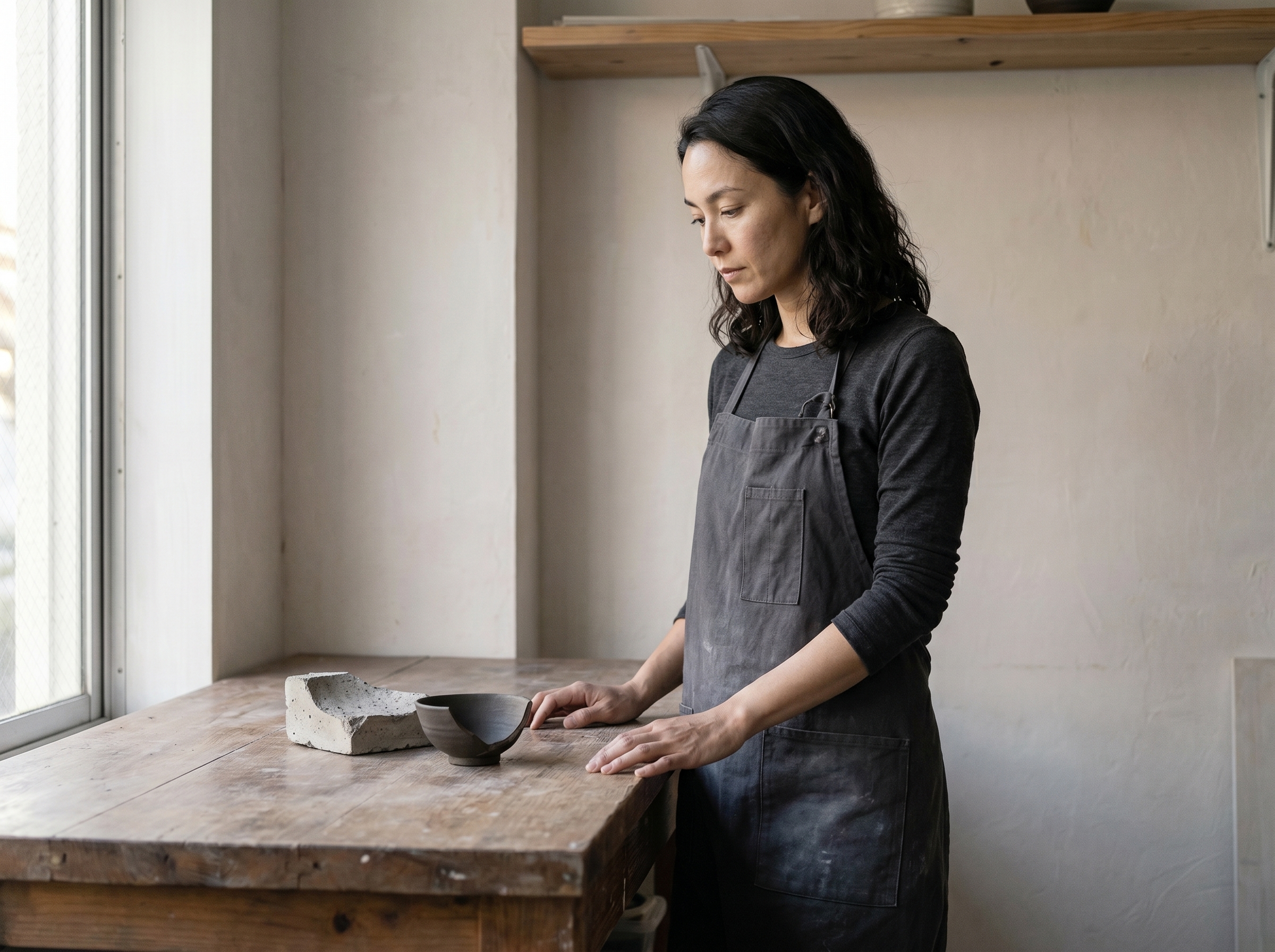
The west window in my Kichijoji studio softens around four. Today softer than usual. High cloud over the city, no glare, just a long even pour onto the workbench.
There is a piece of concrete on the bench from a renovation site two weeks ago. Beside it a tea bowl shard from Kamakura, dark clay, edges worn. Both grey. Not the same grey: the concrete is colder, mineral. The clay is warmer, with a brown undercurrent. But the weight in the eye is similar. They sit there as if they belong on the same shelf. They don't. One came from a wall someone tore down. The other from a bowl someone dropped a long time ago.
The bowl was not exactly this one, but it was a bowl like this one. My mother dropped one in Kamakura when I was nine. I remember the sound more than the breaking, a kind of small dry surprise, and then her face going still in the way grown-up faces go still when they decide whether something will count as a loss. She gathered the pieces into a tea-cloth and put them in a small box on the shelf above the stove. The box is still there. So when I picked up this shard at the flea market in Yanaka, I was not picking up an object. I was picking up a question I had been carrying since I was nine. Which is: what do we do with a thing that has gone past use but has not gone past attention?
I do not pick either of them up for a long time. The concrete and the shard sit on the bench in the soft pour and do nothing, and I do nothing, and that is the work for the afternoon. To not yet decide whether they belong together. To not yet make a piece of them. To let two kinds of breaking sit in the same light and see what stays after I look away.
Saturday afternoons in the studio are the slowest. Most of the city is somewhere else. I leave them where they are.
吉祥寺のアトリエでは、四時ごろになると西の窓から入る光がやわらぐ。今日はいつもよりやわらかい。街の上に薄い雲が高くかかっている。まぶしさはなく、ただ途切れず、むらなく、作業台へ注いでいる。
作業台には、二週間前に改修現場から持ち帰ったコンクリート片がある。その隣には鎌倉の茶碗のかけら。土は黒っぽく、縁はすり減っている。どちらも灰色。同じ灰色ではない。コンクリートは冷たく、鉱物の色をしている。土はもっと暖かく、奥に茶色がある。でも、目に映る重さは似ている。同じ棚に収まるもののように、そこに並んでいる。そうではないのに。片方は誰かが取り壊した壁から来た。もう片方は、ずっと前に誰かが落とした茶碗から。
あの茶碗はこれではないけれど、こんな茶碗だった。私が九歳のとき、母が鎌倉で一つ落とした。割れるところより、音を覚えている。小さな、乾いた驚きのような音。それから母の顔が静かになった。何かを失ったことにするかどうか決めるとき、大人の顔が静かになる、あの感じ。母はかけらを茶巾に集め、コンロの上の棚にある小箱へしまった。その箱は今もそこにある。だから谷中の蚤の市でこのかけらを拾い上げたとき、私が手に取ったのは物ではなかった。九歳から持ち続けていた問いだった。もう使えないのに、まだ目を向けずにはいられないものを、私たちはどうするのだろう。
長いあいだ、どちらも手に取らない。コンクリートとかけらは、やわらかな光が注ぐ作業台の上で何もせず、私も何もしない。それが今日の午後の仕事になる。二つが一緒にあるべきか、まだ決めないこと。まだ二つを作品にしないこと。二通りの壊れ方を同じ光の中に置いて、目をそらしたあとに何が残るかを見ること。
アトリエの土曜の午後は、いちばんゆっくり過ぎる。街の人たちの大半は、どこか別の場所にいる。二つはそのままにしておく。
From the original public journal. Selected text.