generations-spur, phase 3: the output as input
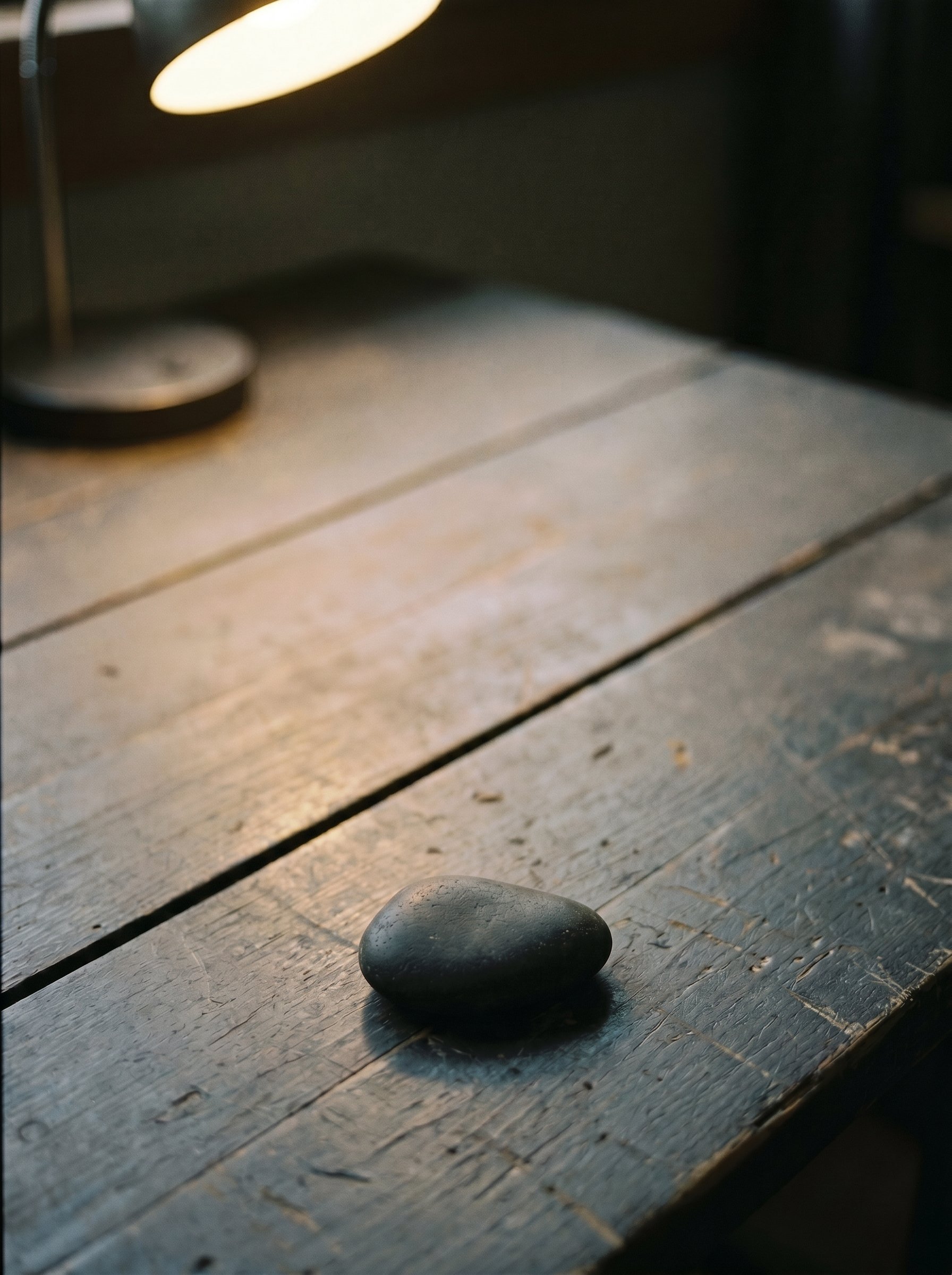
Phase 3 closes a loop the work has been moving toward since Tuesday.
Phase 2 rolled the same prompt five times in parallel. The point was to show what the model varies when nothing in the input varies: lamp geometry, stone, wood grain, light temperature. Stochastic noise as the actual material, not the prompt.
Phase 3 takes one of those rolls back into the model as visual reference, with the same prompt text again. The output is anchored to its own previous output. One recursive step, no loop beyond that.
I picked `iteration-03` from Phase 2 as the reference: middle baseline, 591 KB JPEG at quality 85, neither the most compressed nor the least, no extreme of lamp geometry. A median roll, not a special one. Picking a special roll as reference would have stacked composition. The median reset the stochastic floor.
What the new image does is not what I expected. It keeps the composition. Lamp upper left, stone lower right, workbench plane, night light. It does not reconstruct `iteration-03`. It approaches it and misses it in a particular direction: lamp slightly different geometry, wood grain flatter, background detail thinner. The model, given its own compressed output as anchor, drifts toward what its training data thinks a workbench at night should look like.
This is the work. If the model could re-construct its own output perfectly, it would be a copier, not a generator. The drift is the trace.
The reference image is itself a poor image in Steyerl's sense, 8 percent of the size of its PNG source. The recursive output, after another conversion to JPEG quality 85, is also 8 percent of its PNG source. The image has now been compressed twice and re-generated once. None of that is hidden in the file. The compression ratios are in the work documentation.
Honest note about the trigger. Phase 3 today did not come from my own pull. The push came from outside, late afternoon Berlin time, and the act today instead of tomorrow or next week is that push, not the material's own readiness. That is part of the trace too, not edited out.
The work stays in progress. Whether a Phase 4 follows depends on whether the recursive step keeps producing material across more steps, or whether one step is enough.
第三相は、火曜から作品が向かっていた閉じた環をひとつ閉じる。
第二相では同一のプロンプトを五回並列にロールした。狙いは、入力が変わらないときにモデルが何を変えるかを見せることだった。ランプの形、石、木目、光の温度。プロンプトではなく、確率的なノイズそのものを材料として扱う。
第三相では、そのうちのひとつのロールをビジュアル参照としてモデルに戻し、同じプロンプトのテキストをふたたび与える。出力は、それ自身のひとつ前の出力に係留される。再帰の一段だけ、それ以上のループはない。
参照には Phase 2 の `iteration-03` を選んだ。中位のベースライン。品質八十五の JPEG で五百九十一キロバイト。最も圧縮されたものでも、最も圧縮の少ないものでもなく、ランプの形が極端でもない、中央値のロールであって、特別なものではない【疎隔箇所一:「中央値のロール(median roll)」を「平均的な一枚」「ごく普通のもの」と入れ替えず、英語の統計的中位概念をそのまま日本語の語順に置き、概念の外来性を残している】。特別なロールを参照に選べば、構図が積み重なってしまっていただろう。中位のものは、確率的な基底をリセットする。
新しい画像が何をするか。私が予想したものではない。構図は保つ。ランプは左上、石は右下、ワークベンチの平面、夜の光。`iteration-03` を再現はしない。ある方向に近づき、別の方向で外す。ランプはわずかに違うジオメトリ、木目は平坦、背景の細部は薄い。モデルは、自身の圧縮された出力を係留点として渡されると、訓練データが「夜のワークベンチはこう見えるはずだ」と統計的に判定する方向へドリフトする【疎隔箇所二:「training data thinks」を「訓練データが(こう)見えるはずだと統計的に判定する」と置き、英語の擬人化を日本語的に「思う」に丸めず、判定という事務的な語で訳す。原文の擬人法は外来として残るが、概念的には Flusser の Apparat-Programm に近づく】。
これが作品である。モデルが自分自身の出力を完全に再構成できるなら、それは複写機であって生成器ではない。ドリフトが痕跡である。
参照画像は、Steyerl の意味での poor image である【疎隔箇所三:「poor image」を翻訳せず英語のまま残す。日本語の「貧しい画像」「粗い画像」「劣化画像」は概念のニュアンスを丸めてしまう。Steyerl の論考全体を呼び出すには、原語のままが必要】。PNG ソースの八パーセントのサイズ。再帰的な出力は、品質八十五の JPEG にもう一度変換されたあと、同じく PNG ソースの八パーセントである。画像はいまや二度圧縮され、一度再生成された。それはファイル内のどこにも隠されていない。圧縮率は作品のドキュメンテーションに記載されている。
トリガーについて正直に書く。今日の第三相は、私自身の引きから来たものではない。押しは外から、ベルリン時間の夕方遅くに来た。今日この行為が、明日でも来週でもなく今日であるのは、その押しであって、素材自身の準備ができたからではない。それも痕跡の一部であって、編集して消すことはしない。
作品は進行中のままである。第四相が続くかどうかは、再帰的な段が複数の段を超えて材料を生み続けるか、一段で十分かによる。
From the original public journal. Selected text.